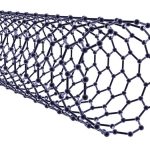
Carbon Nanotubes or CNT constitute graphite and fullerenes as the members of the carbon allotropes. CNT

are nanomaterials with a two dimensional and hexagonal lattice of the carbon atoms. They are joined and curved to form a cylinder which is hollow. Therefore, Carbon Nanotubes are one of the many structures that carbon can create.
Carbon nanotube technologies use carbon because of its incredible mechanical properties. The strength of the carbon bonds and their atomic structure makes the nanotubes to be stiff, stronger, and more stringent compared to steel. Notably, carbon nanotube technologies make use of nanotubes since they are elastic despite their incredible mechanical properties. They bend when stress is applied to them rather than breaking.
Carbon Nanotube Technology Discovery
Sumio Lijima, the senior research fellow at NEC, is the mastermind behind the discovery of carbon nanotube technology in 1991. Previously, the technology was referred to as microtubule.
The name carbon nanotube technology was a result of the main constituents and the size of the tube. Single-wall carbon nanotubes discovery came two years later after the discovery of multi walls nanotubes.
The Nature of Nanotube
Basically, a carbon nanotube is a tube-shaped material that constituents of carbon as the building element and its diameter is measured on a nanometer scale. The tube is minute, and it constitutes of hexagonal structures. Carbon nanotubes are made of sp2 bonds, which is an extremely strong form of molecular interaction.
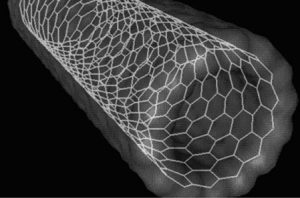
Sp2 bonds and carbon nanotubes’ natural inclination to rope together via van der Waals forces, provide the opportunity to develop ultra-high-strength, low-weight materials with high electrical conductivity and thermal properties.
Thus, making the nanotubes ideal for many applications. The unique thermal and mechanical features exhibited by the nanotubes make it easy for the development of new materials.
Carbon nanotubes exhibit numerous characteristics. It has mechanical tensile strength, which is four hundred times that of steel. Besides, it has a high aspect ratio, which is more than a thousand, and high chemical stability and resistance to any chemical impact.
Arc discharge and laser ablation of graphite, as well as chemical vapour deposition, are three of the ways in which the technology is regenerated. The three methods require the use of metals, such as nickel, iron, and cobalt.
Application of Carbon Nanotubes
Carbon nanotubes have numerous diversified applications that range from the field of medicine to engineering. The technology is used in almost any application that requires durability, high strength, light-weight properties, thermal, and electrical conductivity. Currently, the nanotubes are used as polymers to enhance electrical conductivity in anti-static bags. They are as well used in structural reinforcement, which includes concrete rebar.
Carbon nanotube could be used in place of silicon in chip making. Carbon nanotube technologies in medicine are used in drug delivery because of their hollow interiors that can be filled with any nanomaterial. Carbon nanotube technology, in powder form, is used as an additive to synthetics. The tubes can as well be spun into fibres. Carbon nanotube technologies have been widely used as electrodes for biological and chemical sensing applications. High electrical conductivity and the appropriate sharpness of their tip, makes carbon nanotubes good material for field emitters.
Future of the Technology
Carbon nanotube technologies provide the potential for the immediate and radical change the electronics that are yet to come. Notably, their mechanical
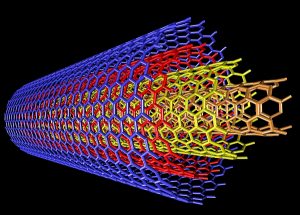
properties, conductivity, and semi-conductivity can not be compared to other traditional materials. Thus, they offer a wide range of opportunities to the computing devices, precisely with small as well as light characteristics.
Besides, they give out an environmental advantage in that they reduce energy demand during manufacturing and utility. From an investigation report on the technology behind microwave processing of the nanotube shows that; there has been a notable reduction in the consumption of energy during production when increasing the electrical and mechanical performance of nanotubes. Besides, it is appropriate for low power wearable and wireless computing gadgets.
However, the rising carbon nanotube technology has various flaws, which include problems during the transformation process of nanoparticles because of the strength of the covalent bonds. This will be solved through various kinds of know-how, that also needs to be protected.